woensdag 22 april 2009

More words

spring to mind
to come quickly into your mind:
Say the word 'Australia' and a vision of beaches and blue seas immediately springs to mind.

dwell on sth phrasal verb
to keep thinking or talking about something, especially something bad or unpleasant:
In his speech, he dwelt on the plight of the sick and the hungry.


rambunctious   Show phonetics
adjective MAINLY US
full of energy and difficult to control:
rambunctious children
a lively and rambunctious puppy


irreversible   Show phonetics
adjective
not possible to change; impossible to return to a previous condition:
Smoking has caused irreversible damage to his lungs.


variegated   Show phonetics
adjective
having a pattern of different colours or marks:
variegated leaves
a variegated plant

Homework for Thursday 23 April

Rehearse Unit 8 

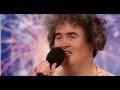
Susan Boyle

Full Version. Win Susan Win. Susan Boyle - Britains Got Talent.

Which face is the odd one out?

Composite with Susan Boyle

By Tom Geoghegan 
BBC News Magazine

The collective gasp that greeted Susan Boyle when she opened her mouth to sing suggests we think talent cannot exist without beauty. Why?

It's unlikely Oscar Wilde would spend his Saturday evenings watching ITV1's Britain's Got Talent, if alive today.

The writer and aesthete preferred beauty pageants to talent contests, and once famously remarked: "It is better to be beautiful than to be good, but it is better to be good than to be ugly."

Boy watching Susan Boyle on YouTube
Susan Boyle is now an internet hit

So who knows what he would have made of the audience rising to its feet to acclaim singer Susan Boyle, who has been unkindly described as "hairy angel" "ugly duckling" and "Shrek".

When she walked on stage, it was as an unwelcome guest at the wrong party or, as psychologist Colin Gill puts it, like a real person in a puppet show.

With this vulnerability came the expectation that she would fail. "Everybody was against you," said one judge.

But three minutes and one standing ovation later, the middle-aged singer was a failure no more. And within days she was an unlikely global star. So has she changed the way society views beauty?

Don't bet on it, says Ellis Cashmore, author of Celebrity/Culture, who says in an ideal world it wouldn't even be a news story because Boyle's voice would be all that mattered.

TALE OF THE UGLY DUCKLING
Boyle taps into the way we want to think being good is what counts, says Gill
'It's the message of the Ugly Duckling, that if you have got what it takes within you, then the external doesn't matter'
'Boyle demonstrated her internal "swanness" of character despite her Ugly Duckling appearance'

"Every time someone watches her their reaction is 'isn't it amazing that someone who looks like that can sound like that?'

"The astonishment we feel re-enforces the belief that there exists not only a correlation between looks and success but a causal relationship. One causes the other.

"The Hollywood movie industry figured that out in the 1940s, that you don't need to act that well as long as you look good. The very fact that we are astonished by Susan Boyle makes it an oddity, so it won't break down barriers, it will have the opposite effect."

Under the knife

When the likes of Boyle come along - and before her Rik Waller and Michelle McManus - the public accept them only as curio pieces, he says, and as odd characters.

Twenty years ago, Alison Moyet's size was hardly mentioned, but since then appearance has become more important on screen, partly because society is bombarded far more by pictures of beautiful people, says Cashmore.

Coronation Street, 1964
Are soaps today more glossy?

Soap operas like Emmerdale (the farm failed to survive the makeover) and Coronation Street feature far more good-looking actors than before.

The message is that beauty and fame/success are linked and to that end, more people are going under the knife for surgery.

But the concept of physical beauty is not fixed, so while some people in the West pursue a tan, people in the Far East might avoid it. And while blond hair and blue eyes may draw envy in one country, another might rank wide hips and big bottoms as more desirable.

One reason why good looks may be linked to success in people's minds is that it can be a reality. Many studies conclude that better-looking people are given positive personality traits by others, the so-called halo effect. The impact is that they earn more money (about 12% on average), are happier, more popular and more likely to be acquitted in court.

THE BENEFITS OF GOOD LOOKS
Earn 12% more (Univ of California, 2007)
Judged more positively (Langlois, 2000)
Rated happier and more successful (Dion, 1972)
More likely to be acquitted by jurors (Sigall & Ostrave, 1975)
Pass more job interviews (Dipboye, Arvey & Terpstra, 1977)

But while they tend to get the most opportunities in society, in careers and in relationships, after this initial advantage they have to prove themselves, says Ingrid Collins, consultant psychologist at the London Medical Centre. And the reason they have this advantage is an evolutionary one.

"It's a natural animal law of selection and looks are the first signal of having good genes.

"Whichever lucky person fits the received wisdom of the day that says they have beauty then they are the ones most likely to be sought after to produce the next generation.

"So with a cat in the wild, it might be the one who can run the fastest and fight the best. But humans have worked out how to survive, with our homes and our televisions and phones, so that isn't such an important attribute any more. And we look for different concepts to elevate."

First impressions

In the fast pace of the modern world, people are assessed on appearance within a blink of an eye, says body language expert Judi James.

"It's called cognitive algebra - people do little sums and make assumptions about people and make attributions. It's part of our survival instincts and has always occurred. But it used to take 10 seconds to sum up someone and now it's a tenth of a second.

"It's based on very complex information that the brain takes in but we don't bother to analyse it. If we did, we would realise that just because Susan Boyle doesn't pluck her eyebrows, that doesn't mean she can't sing."

People viewed as ugly draw unfair assumptions from others, she says, because back in the time of contagious diseases, it was a sign of ill-health - bad skin, deformed facial features and an unhealthy body size.

Yet it's not all about looks. Height is just as important as the face, says James, and you only need to look at how tall world leaders are to see the proof - Nicolas Sarkozy excepted.

NOT PRETTY? FAKE IT
Breathe out before entering a room
Keep shoulders back
Iron out facial expressions
Keep right hand free for a firm handshake
Make eye contact
Listen
Don't be too familiar or over-friendly
Source: Judi James

And while the workplace is a beauty contest of sorts, there are limits. Being very good-looking can count against you, especially if you win a promotion, because you could be considered vain or unintelligent, says James.

Anyway, ordinary-looking people can fake it, she says, through showing confidence in themselves, by having good listening skills, making eye contact and making other people feel special.

"It's all a bit of a con act and about giving off the right vibe. We are drawn to people who have the confidence without the arrogance."

Amid the applause for Boyle was an acknowledgement that ironically, no-one better demonstrates that quality of being happy in their own skin than her.

And that's what makes her attractive, regardless of how she looks.

How to trim your cell phone bill

Video
Trimming your cell phone bill
Today Show

dinsdag 21 april 2009

Times Online Logo 222 x 25

From 
April 20, 2009

Shakespeare's sonnets turn 400

After 400 years Shakespeare's sonnets still hold a fascination for lovers - and for scholars seeking insights into the poet's soul

undefined

Happy 400th anniversary to Shakespeare's sonnets. They are still going strong. You can buy dozens of different editions, ranging from pocket keepsakes for lovers to hefty hardbacks with hundreds of pages of scholarly explanations. Last summer you could hear Simon Callow recite the whole sequence of 154 at the Edinburgh Festival. And this month in Berlin the avant-garde American stage director Robert Wilson has teamed up with the singer-songwriter Rufus Wainwright to turn 24 of them into cross-dressed theatrical dreamscapes. So what is the source of their enduring power?

On May 20, 1609, a publisher called Thomas Thorpe entered in the Stationers' Register his right to publish “a booke called Shakespeares sonnettes”. A few weeks later, browsing the bookstalls in the yard of St Paul's, you could have found the little volume and purchased it for sixpence.

Probably the greatest love poems in English literature (though John Donne runs them close), the sonnets introduced to the language such phrases as “shall I compare thee to a summer's day?”, “the darling buds of May” and “remembrance of things past”. They express almost every permutation of love, from the first leap of the heart at the sight of the beloved to the last ache of sorrow and bitterness in the face of death or, worse, betrayal.

Reading the sequence through, there seems to be a story - though, in contrast to Shakespeare's plays, the twists of the plot and the nature of the characters are shadowy and mysterious. The poet begins by addressing a beautiful and high-ranking young man. The youth is in a position of power and the poet in one of supplication. Absence, travel, scandal, melancholy, estrangement and reunion are variously implied. The young man appears to have an affair with the poet's mistress, thus abusing the bond of friendship. Then the poet is discomposed by a rival who wins the patronage of the fair youth with his “well-refined pen”.

Again and again, the sequence returns to the great battle between love and time. The mood becomes autumnal (“Bare ruined choirs where late the sweet birds sang”). Time is relentless (“Like as the waves make towards the pebbled shore,/ So do our minutes hasten to their end”), but the act of writing offers the hope of immortality (“So long as men can breathe or eyes can see,/ So long lives this and this gives life to thee”).

Then the poet turns his attention from the “lovely boy” to the “dark lady”. Dark-complexioned and sexually voracious, she inspires a complex mix of emotions: desire, fondness, self-abnegation, misogyny, a lingering sense of the sour taste that comes after sex (“The expense of spirit in a waste of shame/ Is lust in action”). One moment the poet is bitter, the next dazzlingly playful, as he parodies conventional love poetry (“My mistress' eyes are nothing like the sun”) and puns on the multiple senses of the word that is also his own name: Will.

We think of love sonnets as the most personal of poems. The little book called Shakespeare's Sonnets is a source of endless biographical fascination because it seems to be the one work in which its author speaks in his own voice. There is, however, no intrinsic reason why a sonnet should not be a dramatic performance, just as a play is. It may be that for an Elizabethan poet to dash off a sequence of sonnets was a kind of exercise. Shakespeare could have invented the “plot” and “characters” of his sonnets.

We simply do not know whether the sonnets are dramatic performances written out of sheer imagination or poetic reimaginings of real figures and events. Because Shakespeare is so guarded, the circumstances of composition have provoked centuries of speculation. The young man to whom most of the poems are addressed may or may not be synonymous with the mysterious “Mr W. H.” who is named in the collection's dedication “to the only begetter of these ensuing sonnets.”

The traditional candidates for the role are the Earl of Pembroke and the Earl of Southampton, though neither was a “Mr”. A provocative case has been made for the possibility that “Mr W. H.” is actually a misprint for “Mr W. S.” and that in the dedication Thomas Thorpe, the publisher, is merely acknowledging Shakespeare as the “only begetter” of the sonnets (“begetting” was a common metaphor for authoring).

Unlike Shakespeare's narrative poem Venus and Adonis, the bestselling literary work of the Elizabethan age, the sonnets were not reprinted or frequently quoted. The vogue for sonneteering had passed its prime by 1609. Some scholars have supposed - without any direct evidence - that they were actively suppressed because of their risky sexual orientation.

Dozens of male Elizabethan poets wrote sonnet sequences, but only Shakespeare and a certain Richard Barnfield addressed their poems explicitly to a man. Barnfield wrote in the explicitly homosexual tradition of ancient Greek pastoral poetry, whereas Shakespeare's sequence emphasises the spiritual aspects of the poet's love for the fair youth. The only sonnets in the collection where “Will” is actually in bed with a lover are addressed to the dark lady. Taken in their entirety, the sonnets associate heterosexual desire with consummation and disgust, homoerotic attraction with spirituality and an intensity that derives in large measure from the impossibility of consummation. It might be better to read the opposition between dark lady and fair youth as a dramatic device: one is a “character” representing desire in its sexual manifestation, the other in its idealising and spiritual one.

That is what I always tell my students - and myself - as I sit down to reread the sonnets. Don't be drawn into the trap of supposing that they are autobiographical: that is an illusion of Shakespeare's art. But it's very hard to stop yourself. When I worked on them for my book The Genius of Shakespeare in the 1990s, I became convinced that I had identified the dark lady: she was the wife of John Florio, the Italian tutor in the household of the Earl of Southampton. When I returned to them recently for my book Soul of the Age, I became convinced that I had identified the rival poet: he was John Davies of Hereford, the greatest calligrapher in England and a hanger-on in the circle of the Earl of Pembroke.

Each time the sonnets had worked their magic: they had made me project a story of my own into their narrative. They work like love itself by making you want to join your story to that of another. And that, of course, is why they are the greatest of all love poems and why they are still so fresh after 400 years. When Shakespeare writes: “Let me not to the marriage of true minds/ Admit impediments” the two minds that are joined are no longer his and his lover's. When I read the poem, they are mine and my lover's. When you read it, they are yours and your lover's.

Jonathan Bate's Royal Shakespeare Company edition of the sonnets is published this month


Why not watch last night's CBS Evening News with Katie Couric?

Evening News Online, 04.20.09

More exercises with conditonals

If you feel you haven't really mastered the conditionals you might find the following webaddress helpful: http://www.englisch-hilfen.de/en/exercises_list/if.htm . It's a German site (I'm sorry) and it is very good. It's provides a great opportunity to kill time during free hours. Enjoy!

Sprucing up your knowledge of conditionals

Conditionals: Summary

Here is a chart to help you to visualize the basic English conditionals. Do not take the 50% and 10% figures too literally. They are just to help you.

probabilityconditionalexampletime
100%
zero conditionalIf you heat ice, it melts.any time
50%
first conditionalIf it rains, I will stay at home.future
10%
second conditionalIf I won the lottery, I would buy a car.future
0%third conditionalIf I had won the lottery, I would have bought a car.past

New words for your word file

make up for lost time

to spend a lot of time doing something because you did not have the opportunity to do it previously 

I didn't travel much as a young adult but I'm certainly making up for lost time now.

in the nick of time

at the last possible moment 

A nick was a mark on a stick which was used in the past to measure time.
We got there just in the nick of time. A minute later and she'd have left.


A stitch in time (saves nine).

something that you say which means it is better to deal with a problem early before it gets too bad 

If you don't repair the oil leak now, you might damage the whole engine. It's a case of a stitch in time.

(but remember: riches are better than stitches!)

bide your time

to wait patiently for a good opportunity to do something 

She was biding her time until she could get her revenge.

have time on your hands

to have time when you have nothing to do 

Now that her children are all at school, she has a lot of time on her hands.

(from Cambridge International Dictionary of Idioms)

Justice Stevens Renders an Opinion on Who Wrote Shakespeare's Plays

It Wasn't the Bard of Avon, He Says; 'Evidence Is Beyond a Reasonable Doubt'

In his 34 years on the Supreme Court, Justice John Paul Stevens has evolved from idiosyncratic dissenter to influential elder, able to assemble majorities on issues such as war powers and property rights. Now, the court's senior justice could be gaining ground on a case that dates back 400 years: the authorship of Shakespeare's plays.

Justice Stevens, who dropped out of graduate study in English to join the Navy in 1941, is an Oxfordian -- that is, he believes the works ascribed to William Shakespeare actually were written by the 17th earl of Oxford, Edward de Vere. Several justices across the court's ideological spectrum say he may be right.

This puts much of the court squarely outside mainstream academic opinion, which equates denial of Shakespeare's authorship with the Flat Earth Society.

"Oh my," said Coppelia Kahn, president of the Shakespeare Association of America and professor of English at Brown University, when informed of Justice Stevens's cause. "Nobody gives any credence to these arguments," she says.

Nonetheless, since the 19th century, some have argued that only a nobleman could have produced writings so replete with intimate depictions of courtly life and exotic settings far beyond England. Dabbling in entertainments was considered undignified, the theory goes, so the author laundered his works through Shakespeare, a member of the Globe Theater's acting troupe.

Over the years, various candidates have attracted prominent supporters. Mark Twain is said to have favored Sir Francis Bacon. Malcolm X preferred King James I. De Vere first was advanced in 1918 by an English schoolmaster named J. Thomas Looney. More recently, thanks in part to aggressive lobbying by a contemporary descendant, Charles Vere, Oxford has emerged as a leading alternate author.

The bow-tied, 88-year-old Justice Stevens, who often leads the court's liberal wing, says he became especially interested in Shakespeare when he attended the Chicago World's Fair in 1933, where a replica Globe Theater presented many of the plays. Justice Stevens's father ran the restaurant concession nearby.

Justice Stevens didn't start thinking about the authorship question, though, until 1987, when he joined Justices William Brennan and Harry Blackmun in a mock trial on authorship.

The panel found insufficient evidence to prove de Vere's claim. Justice Brennan vigorously rejected many Oxfordian premises, finding that "the historical William Shakespeare was not such an ignorant butcher's boy as he has been made out." It was a closer call for the other two justices.

"Right after the argument, both Harry and I got more interested in it," Justice Stevens says. In a visit to Shakespeare's birthplace in Stratford-upon-Avon, Justice Stevens observed that the purported playwright left no books, nor letters or other records of a literary presence.

"Where are the books? You can't be a scholar of that depth and not have any books in your home," Justice Stevens says. "He never had any correspondence with his contemporaries, he never was shown to be present at any major event -- the coronation of James or any of that stuff. I think the evidence that he was not the author is beyond a reasonable doubt."

All signs pointed to de Vere. Justice Stevens mentions that Lord Burghley, guardian of the young de Vere, is generally accepted as the model for the courtier Polonius in "Hamlet." "Burghley was the No. 1 adviser to the queen," says the justice. "De Vere married [Burghley's] daughter, which fits in with Hamlet marrying Polonius's daughter, Ophelia."

Shakespeare dedicated two narrative poems to the earl of Southampton, Henry Wriothesley, "who also was a ward of Lord Burghley and grew up in the same household," Justice Stevens says. "The coincidence...is really quite remarkable." He asks, "Why in the world would William Shakespeare, the guy from Stratford, be dedicating these works to this nobleman?"

Not all members of the court are persuaded. "To the extent I've dipped in, I'm not impressed with the Oxfordian theory," says Justice Anthony Kennedy. The spread of Oxfordianism on the court "shows Justice Stevens's power and influence," Justice Kennedy says. Of the nine active justices, only Stephen Breyer joins Justice Kennedy in sticking up for Will. Chief Justice John Roberts and Justices Clarence Thomas and Samuel Alito declined to comment.

Justice Sandra Day O'Connor, who retired in 2006, cast the court's deciding vote many times. On Shakespeare, she says, "I'm not going to jump into this and be decisive."

According to Justice Stevens, "Sandra is persuaded that it definitely was not Shakespeare" and "it's more likely de Vere than any other candidate." Pressed, Justice O'Connor says, "It might well have been someone other than our Stratford man."

Justice Stevens admits there's a "fringe" element of anti-Shakespearians who spin elaborate but unlikely theories. "I think that's one of the things that hurts the cause -- and the fact that the guy who first came up with de Vere was named Looney," he says.

On the other hand, "a lot of people like to think its Shakespeare because...they like to think that a commoner can be such a brilliant writer," he says. "Even though there is no Santa Claus, it's still a wonderful myth."

On this issue, Justice Stevens sees eye to eye with his frequent conservative antagonist, Antonin Scalia, who says that as a child he received a monograph propounding de Vere's cause from a family friend.

"My wife, who is a much better expert in literature than I am, has berated me," says Justice Scalia. "She thinks we Oxfordians are motivated by the fact that we can't believe that a commoner could have done something like this, you know, it's an aristocratic tendency."

Justice Scalia prefers to turn the tables.

"It is probably more likely that the pro-Shakespearean people are affected by a democratic bias than the Oxfordians are affected by an aristocratic bias," he says.

Justices David Souter and Ruth Bader Ginsburg say they're not sure who wrote the plays. Justice Ginsburg, however, provided a March email from her daughter Jane, a law professor currently in Rome. Jane Ginsburg wrote she recently saw an Italian television program postulating that "Shakespeare was Sicilian and Jewish, sort of."

Justice Stevens can indulge his love of the Bard at the Folger Shakespeare Library, a block from the Supreme Court. He says he had a particular brainstorm after learning the library held a Bible that once belonged to de Vere.

"In two of the plays Shakespeare has an incident using the bed trick, in which the man is not aware of the identity of the woman he's sleeping with," Justice Stevens says, referring to "All's Well That Ends Well" and "Measure for Measure." "And there's an incident in the Old Testament where the same event allegedly occurred."

Justice Stevens says he reasoned that if de Vere had borrowed the escapade from his Bible, "he would have underlined those portions of it. So I went over once to ask them to dig out the Bible."

Unfortunately, the passage involving the substitution of Leah for Rachel in Jacob's bed, Genesis 29:23, was not marked. "I really thought I might have stumbled onto something that would be a very strong coincidence," Justice Stevens says. "But it did not develop at all."

Justice Stevens's clerks sometimes find themselves drawn into the debate. Deborah Pearlstein, now a human-rights scholar at Princeton, says the justice was intrigued by her undergraduate study of French-language Shakespeare productions, and asked her to help edit an essay on the authorship dispute.

"It was just great fun," says Ms. Pearlstein. To her, however, the authorship evidence is inconclusive. Besides, "coming off a college education in postmodern literary theory, I was mildly troubled by the 'who-shot-John?' interest in who the real Shakespeare was," she says. "My view is that the work stands on own."

Justice Stevens doesn't disagree. Even if he were proved wrong, he says, "I've had much more serious disappointments in this job than that one."

Write to Jess Bravin at jess.bravin@wsj.com

Printed in The Wall Street Journal, page A1